• Blog

    Cape Town Airport to Stellenbosch: How to Get There Stress-Free

    It is late, your flight has just landed, and after a long day the last thing you want is to stand at arrivals refreshing an app and hoping a car accepts. SheCab began with exactly this trip: in 2021, our founder needed a safe way to get from Stellenbosch to the airport and could not find a ride she trusted. So she built one.

    Stellenbosch is about 35 to 40 km from Cape Town International Airport, roughly a 35 to 45 minute drive depending on traffic. There is no direct train or bus between the airport and Stellenbosch, so most travellers use a pre-booked transfer, a taxi app or a hired car. Here is what to expect and how to make the trip easy.

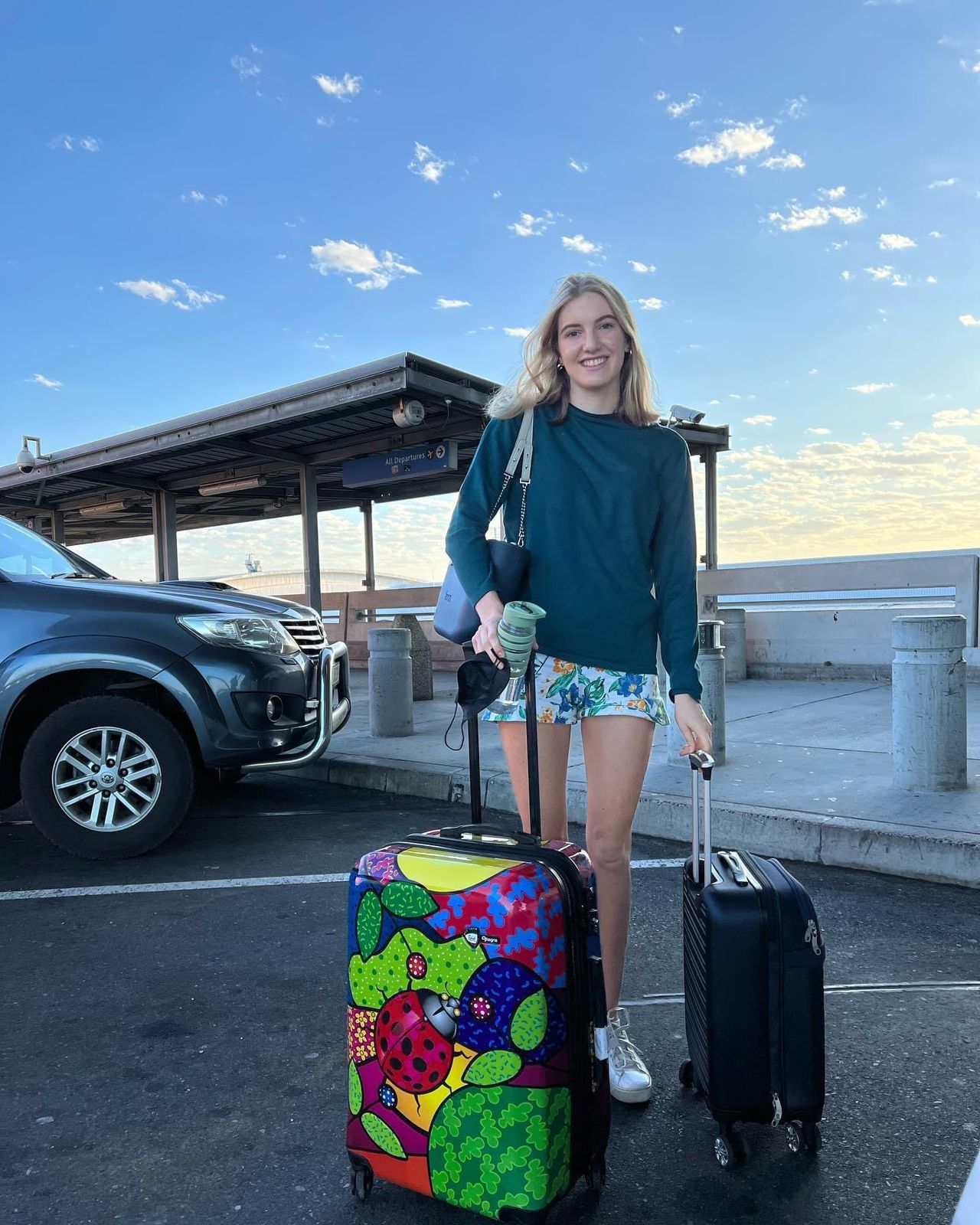
    SheCab passengers at Cape Town International Airport departures

    How far is Cape Town Airport from Stellenbosch?

    The route is simple: from the airport onto the N2 towards Somerset West, then onto the R310 (Baden Powell Drive) into Stellenbosch. Allow extra time on Friday afternoons, during weekday peak hours and throughout December, when traffic on the N2 builds up.

    What are your transport options?

    • Pre-booked airport transfer: your driver is arranged before you land and takes you straight to your door. Best for late flights, families, heavy luggage and first-time visitors.
    • Taxi apps: convenient, but prices can rise sharply at busy times and you may wait for a car.
    • Car hire: useful if you plan to explore on your own, less ideal if your plans include wine tasting.
    • Accommodation shuttles: some guesthouses and hotels arrange transfers, so ask when you book.

    Why pre-booking makes the trip easier

    After a long flight, nobody wants to negotiate a price or search for a ride. With a pre-booked transfer you know your fare before you travel, you know who is collecting you, and your driver already has your flight details and destination. It also works the other way: book your trip back to the airport at the same time, so departure day is one less thing to plan.
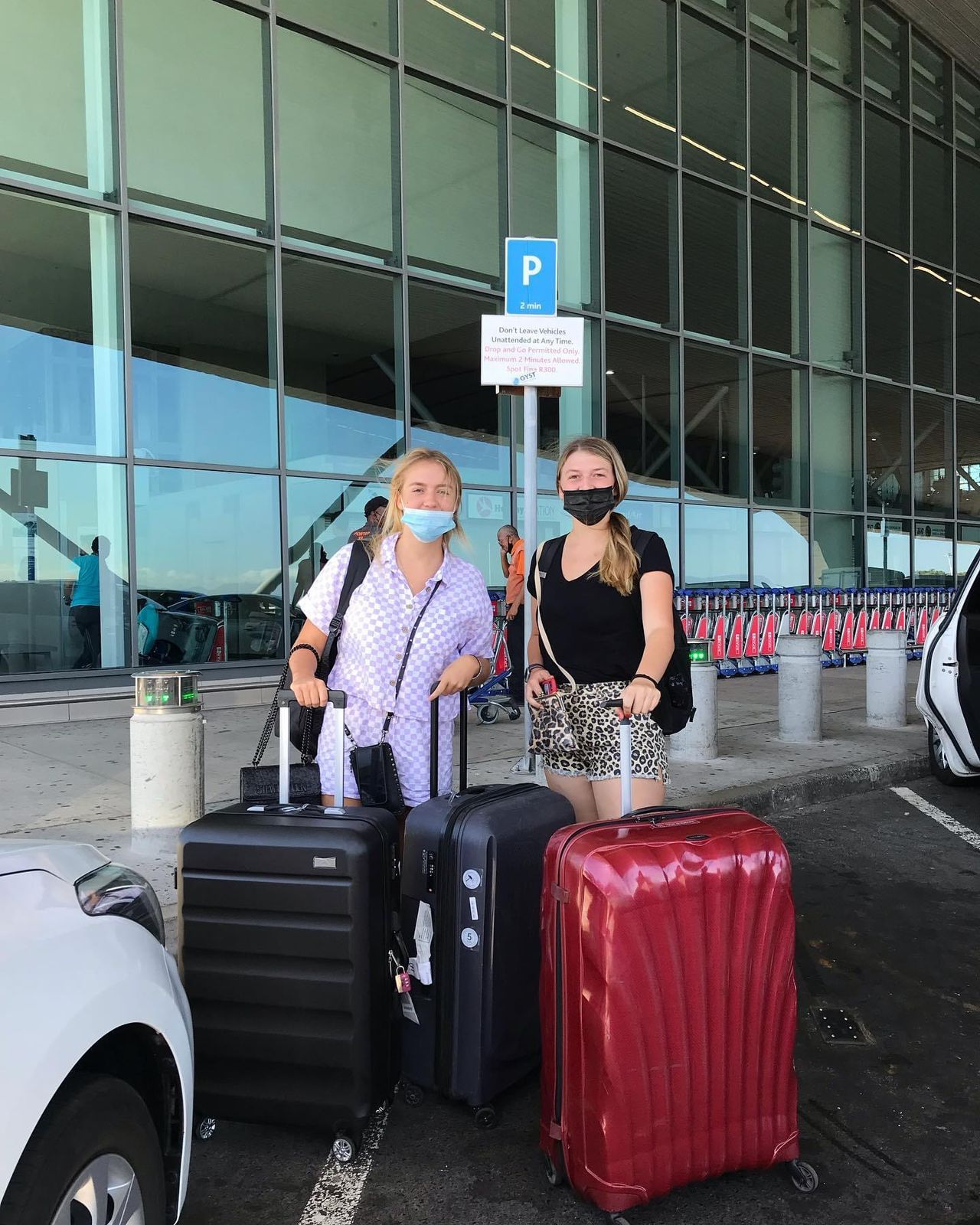
    Traveller with luggage at Cape Town International Airport

    Travelling over the festive season?

    • Book early. December is the busiest time of year in the Winelands and transfers fill up quickly.
    • Share your flight number. If your flight is delayed, your driver can plan around it.
    • Leave room for traffic. For departures, plan to be at the airport about two hours before domestic flights and three hours before international flights.
    • Tell us about luggage. Extra bags, prams or sports equipment can affect which vehicle you need.

    What the trip looks like with SheCab

    You send your flight details and address before you travel. We confirm your fare, then your driver’s name and car, so you know exactly who is coming. When you land, she keeps in touch until you meet, and from there it is door to door. Passengers often tell us the trip goes faster than they expected.

    “Such a pleasant ride and driver kept contact entire time after landed at Cape Town International until been picked up.” Sonet M., Google review

    “She arrived at the perfect time and made the trip fly by.” Kristina S., Google review

    Book your trip: WhatsApp +27 66 565 2560 or shecab.co.za.

    Frequently asked questions

    How long does it take to get from Cape Town Airport to Stellenbosch?

    About 35 to 45 minutes by car, and longer in peak traffic.

    Is there a bus or train from Cape Town Airport to Stellenbosch?

    There is no direct train or bus route between the airport and Stellenbosch. A pre-booked transfer is the simplest door-to-door option.

    How far in advance should I book an airport transfer?

    As early as you have your flight details, especially in December and January. A few days ahead is ideal; for peak dates, book a week or more in advance.

    Can SheCab take me back to the airport too?

    Yes. You can book both trips at once.
  • Blog

    Now Recruiting: Women Drivers Across the Western Cape

    SheCab is recruiting professional women drivers across the Western Cape, full time or part time. If you have your own car and want flexible, dignified work, we would like to hear from you.

    What you need

    • A valid driver’s licence and Professional Driving Permit (PDP)
    • Your own SUV, crossover or premium sedan in good condition
    • A professional, friendly approach and good communication

    What you get

    • Flexibility: choose the trips that suit you.
    • Weekly pay for every trip you drive.
    • A women-led team and a community of women drivers.

    How to apply

    1. Apply online at shecab.co.za/driver.
    2. We contact shortlisted applicants.
    3. We verify your licence, PDP and vehicle and complete our vetting.
    4. Start driving.

    Know a woman who would be great at this? Please share this post.

    See our impact

  • Blog

    The licence gap: why so few South African women drive

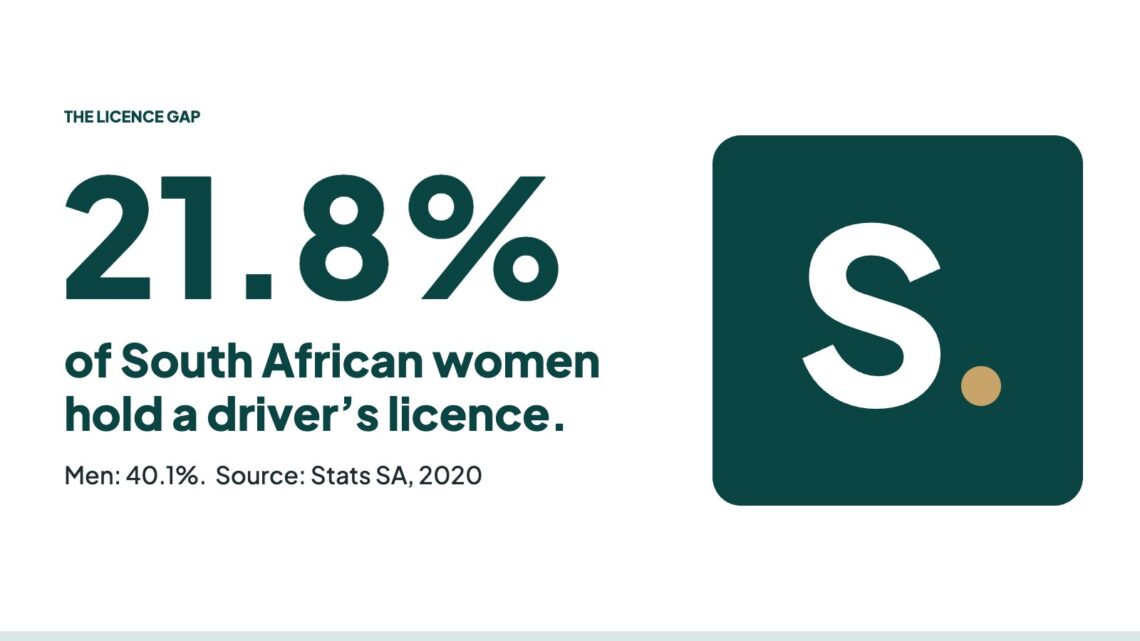
    Fewer than one in four South African women holds a driver’s licence. For men, it is two in five. That gap shapes how women get to work, how safely they travel, and which jobs are open to them.

    The numbers

    Statistics South Africa’s most recent gender and transport report found that in 2020, 21.8% of women held a driver’s licence, compared with 40.1% of men. Black African women had the lowest rate of any group, at 13.4%, up from 9.6% in 2013.

    The national licence register tells the same story. By December 2025, South Africa had 16.5 million driving licences on the NaTIS system, and the Road Traffic Management Corporation reports that holders are split 61.1% male and 38.9% female. That is roughly 10 million men and 6.4 million women.

    What the gap means day to day

    Without a licence or a car, women depend on others to move. In 2020, taxis were the most common way for working women to commute (33.6%), while men were far more likely to drive themselves to work: 41% of male commuters were car drivers, 11.8 percentage points more than women. Among students in post-school education, more than 47% of women travelled by taxi, compared with 34.7% of men.

    Stats SA links limited transport to reduced access to learning, jobs and everyday life, and notes that women face added risk walking to stops, waiting at ranks and travelling, particularly late at night.

    A jobs issue, not only a transport issue

    The licence gap sits alongside a jobs gap. In the second quarter of 2026, the official unemployment rate was 37.5% for women and 30.3% for men, and only 54.9% of women were in the labour force, compared with 64.4% of men.

    A licence opens doors that stay closed without one, including professional driving itself, a field where women remain under-represented.

    What SheCab is doing

    SheCab was founded in 2021 to give women transport they can trust, driven by women. Today, 32 professional women drivers are on the road with us.

    We want to grow that number. SheCab plans a programme, with partners, that takes women from learner’s licence to paid, professional driver:

    • Licence support: funding for learner’s and driver’s licences, and lessons, for women from under-served communities.
    • Professional driver training: defensive driving, customer care, first aid and passenger safety.
    • A paid pathway: graduates can earn as vetted SheCab drivers in airport, corporate and scholar transport.

    Partner with us. We are looking for corporate social investment partners, SETAs, driving schools and vehicle partners to fund and grow this programme. Contact us at info@shecab.co.za.

    Sources

  • Blog

    For Women by Women, Happy Women’s Day

    August 9, 2025

    On this Women’s Day, we pause to recognize and thank the many women who form the heart of our community, the women who drive, support, and use our service every day with courage and care.

    Across South Africa, women face many challenges, including the daily realities of insecurity and violence. Yet, the women who drive for us, whether full-time or part-time, show incredible resilience and professionalism. They balance the demands of work and family, often driving to support their loved ones or providing extra income. Others drive simply because they find joy and independence behind the wheel.

    These women are more than drivers, they are caregivers, friends, and protectors on the road. Their kindness, patience, and calm presence help create a safer environment for all passengers, especially women who rely on safe transport to reach work, school, or home.

    Behind the scenes, many women work quietly and diligently in administrative roles, supporting the daily running of the service and ensuring that everything operates smoothly. Their dedication is a vital part of this community.

    And to the thousands of women who choose to travel with us, your trust inspires us every day. Together, all of these women contribute to a shared goal: creating safer spaces and building a supportive network where women can move without fear.

    Today, we honor all of you, the women who drive, support, and travel, recognizing your strength, your care, and your important role in making every journey safer.

    Thank you for your resilience, your kindness, and your commitment.